The Zebra Dove: Aesthetics of Sound and a Living Cultural Heritage of Southeast Asia
The Zebra Dove: Aesthetics of Sound and a Living Cultural Heritage of Southeast Asia
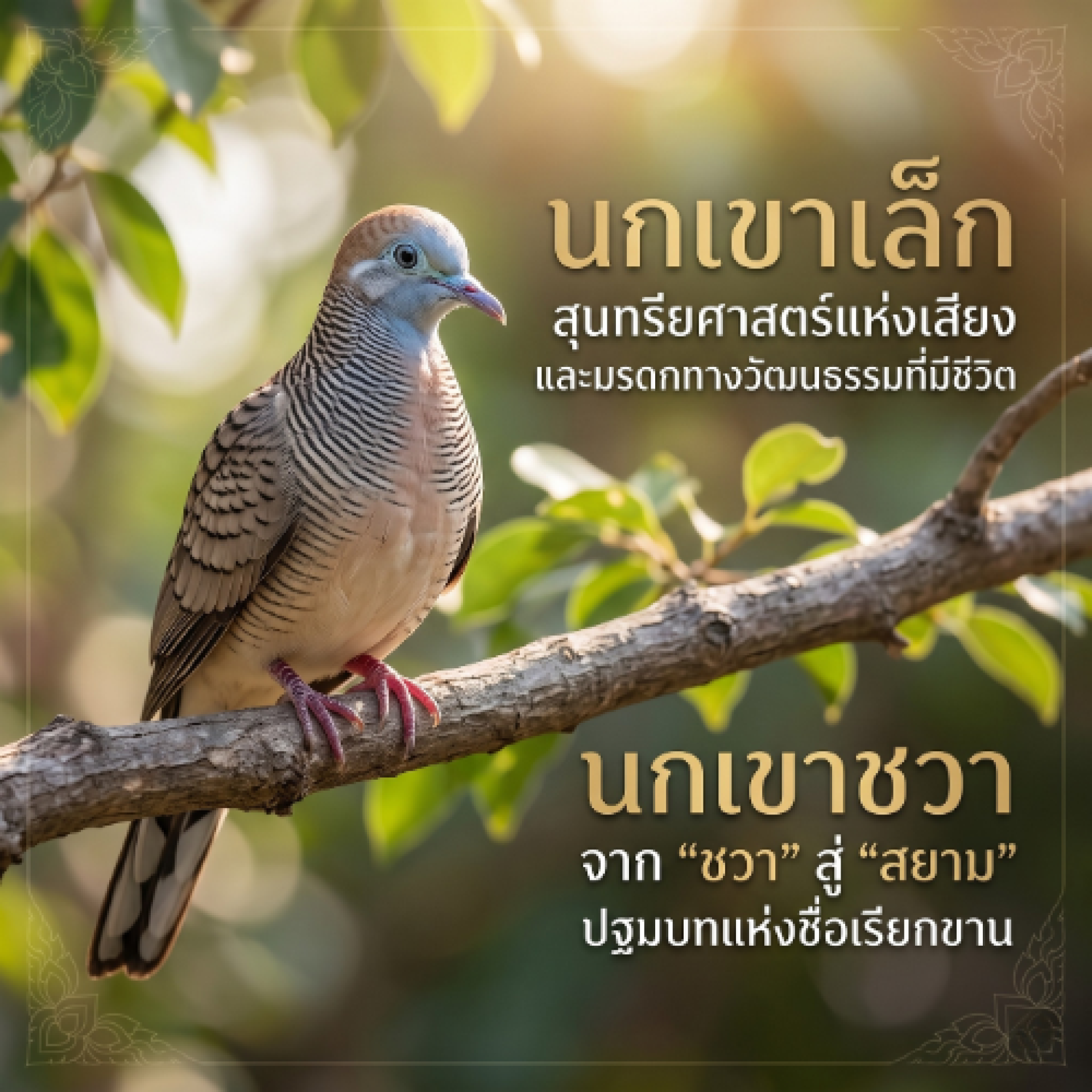
In the world of bird-rearing, no species has influenced the soul and way of life of the people across the Malay Peninsula and Southern Thailand more than the "Zebra Dove" (Geopelia striata). Known locally in Thailand as Nok Khao Java or Nok Khao Lek, this bird is more than just a pet kept for pleasure; it is a symbol of peace, serenity, and simplicity. Moreover, it serves as a vital gear in a cultural economy that has been passed down for centuries.
From "Java" to "Siam": The Origins of the Name
The name "Zebra Dove" (or Nok Khao Java in Thai) is steeped in fascinating historical context. There are three primary hypotheses regarding its Thai name:
The Art of Sound: When Resonance is Worth Its Weight in Gold
The most distinctive feature of the Zebra Dove is its "song" or "coo." Professional enthusiasts use years of experience to classify these vocal tones into three primary levels:
In the wild, the Zebra Dove primarily feeds on small seeds and grains found on the ground or in grasslands. Their diet includes:
For a Zebra Dove to reach a lifespan of 20–30 years and maintain the power to produce a resonant "Large Voice," the foundation is nutrition. Because these birds naturally forage for high-quality grains, "Winner Zebra Dove" bird food is meticulously designed to mimic their natural diet. By combining multi-colored millets, sorghum, and six types of premium-grade grains, it nourishes the bird from within, resulting in a powerful and healthy song. Experience the "heavenly sound" every morning by caring for your beloved bird with the quality of "Winner Zebra Dove." - More info : Premium Mixed Bird Food "Winner Zebra Dove"
Charming Facts About the Zebra Dove You May Not Know
In the world of bird-rearing, no species has influenced the soul and way of life of the people across the Malay Peninsula and Southern Thailand more than the "Zebra Dove" (Geopelia striata). Known locally in Thailand as Nok Khao Java or Nok Khao Lek, this bird is more than just a pet kept for pleasure; it is a symbol of peace, serenity, and simplicity. Moreover, it serves as a vital gear in a cultural economy that has been passed down for centuries.
From "Java" to "Siam": The Origins of the Name
The name "Zebra Dove" (or Nok Khao Java in Thai) is steeped in fascinating historical context. There are three primary hypotheses regarding its Thai name:
- It is a bird frequently found on the island of Java, Indonesia.
- Its melodious cooing resonates with a sound similar to the Pi Java (Javanese flute).
- It was introduced and popularized by Javanese people in ancient times.
The Art of Sound: When Resonance is Worth Its Weight in Gold
The most distinctive feature of the Zebra Dove is its "song" or "coo." Professional enthusiasts use years of experience to classify these vocal tones into three primary levels:
- Small Voice (High Pitch): Offers a crisp, clear, and fluid sensation.
- Medium Voice: Provides a balanced and mellow tone that is pleasant to the ear.
- Large Voice (Deep Pitch): Delivers a deep, resonant, and profound tone—often the most sought-after and prized quality in the industry.
In the wild, the Zebra Dove primarily feeds on small seeds and grains found on the ground or in grasslands. Their diet includes:
- Grains: Short-grain paddy, sorghum (red/yellow), and millet (white, yellow, black, and red).
- For Adult Birds: Domesticated birds can be fed husked rice, brown rice, and specialized millet blends.
- For Chicks: Hand-feeding formulas mixed with warm water to an appropriate consistency are recommended. Clean water must be available at all times to prevent dehydration.
For a Zebra Dove to reach a lifespan of 20–30 years and maintain the power to produce a resonant "Large Voice," the foundation is nutrition. Because these birds naturally forage for high-quality grains, "Winner Zebra Dove" bird food is meticulously designed to mimic their natural diet. By combining multi-colored millets, sorghum, and six types of premium-grade grains, it nourishes the bird from within, resulting in a powerful and healthy song. Experience the "heavenly sound" every morning by caring for your beloved bird with the quality of "Winner Zebra Dove." - More info : Premium Mixed Bird Food "Winner Zebra Dove"
Charming Facts About the Zebra Dove You May Not Know
- The "Zebra" Pattern: Its common name comes from the intricate black barred patterns across its body, neck, and wings, resembling the stripes of a zebra—a unique feature not found in other dove species.
- Blue-Gray Face and Red Legs: These are key physical traits for identification. Males typically exhibit a more pronounced blue-gray face, while females often have more brown shading and patterns extending from the chest to the abdomen.
- The Southern Way of Life: In Southern Thailand—particularly in Pattani, Yala, Narathiwat, Satun, and Songkhla—rearing Zebra Doves is a way of life. These provinces serve as the most significant hubs for Zebra Dove culture.
- Docile Nature: Beyond their voice, these doves are known for being easily tamed. They are peaceful and prefer to live in pairs, making them a long-standing symbol of family happiness.
- A Lifelong Companion: Zebra Doves begin to showcase their vocal potential at around one year of age. With consistent care and proper nutrition, they can bring joy to their owners for nearly half a human lifetime.
- Physical Characteristics: A small bird with brownish-gray plumage, fine black barred patterns on the neck and breast, and distinct light blue skin around the eyes.
- Habitat: Commonly found in open woodlands, scrublands, meadows, and agricultural areas. They are often seen foraging in pairs on the ground throughout Southern Thailand and Southeast Asia.
Related Content